Every year, Flintridge Prep’s French students drive 45 minutes to The American French Film Festival in West Hollywood to watch a new French film before it’s released in theaters. The festival’s centerpiece film this year was Nouvelle Vague.
The film’s director, Richard Linklater, a beloved name in the film industry best known for the 1993 classic Dazed and Confused, brings his love for French cinema to the big screen in his latest project. The 2025 comedy-drama Nouvelle Vague follows the famous French film director Jean-Luc Godard (played by Guillaume Marbeck) and the creation of his monumental film Breathless (1960). Breathless is considered a revolutionary film in cinematic history, as it inspired the Nouvelle Vague, or New Wave movement, that exploded onto the international film scene in the ‘60s. Godard is considered a leading figure in this movement that famously rejected traditional conventions of French filmmaking through experimental practices and aesthetics. Richard Linklater pours his love for this genre into Nouvelle Vague—a movie he described not just as a love letter, but as a thank-you note to the inspirational work of Godard. The film, which had its world premiere at the Cannes Film Festival this past May, was met with rapturous applause, earning an 11-minute standing ovation from the audience—an understandable reaction given that the theater was likely full of French cinephiles.
Last year, students raved about the action-packed drama Le Comte de Monte Cristo—setting a high bar for this year’s centerpiece film. After much anticipation, however, Nouvelle Vague proved itself to be much more polarizing than Le Comte de Monte Cristo. When asked what they thought of the film, the general consensus was that it was interesting, occasionally funny, yet somewhat slow-paced. One student claimed, “[they] liked it, but wouldn’t go and watch it again.”
Compared to Monte Cristo, an action movie, Nouvelle Vague was a sharp pivot in genre. Among students, the black and white film seemingly reinforced its stereotype, as many found it uninteresting.
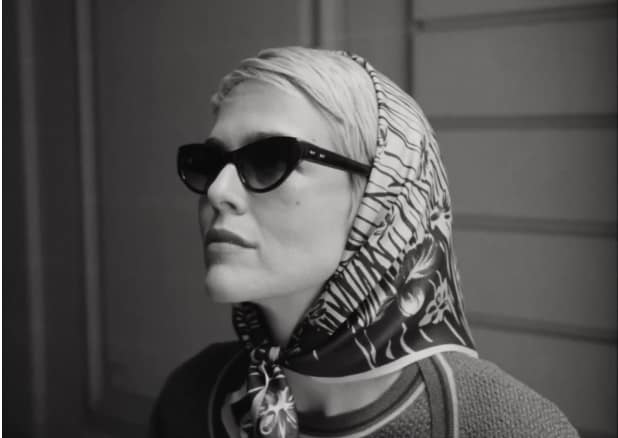
Despite what students thought, Nouvelle Vague was both entertaining and weighted. The film’s storytelling was tastefully crafted to emphasize a defining characteristic of New Wave film: authenticity. Zoey Deutch’s portrayal of American actress Jean Seberg was sweet and raw. Deutch breathed life into the character through charm and mannerisms identical to those of the late American film icon. Aubry Dullin delivered a similarly stellar performance. The French actor not only bears a striking resemblance to his character Jean-Paul Belmondo, but also possesses the same dynamic presence on the screen.
For a Q&A after the film’s premiere, the film’s actors, Zoey Deutch, Guillaume Marbeck, and Aubry Dullin, joined Richard Linklater on stage. Throughout the informal interview, Linklater commented on the film’s texture, stressing the importance of creating a movie in the same style as the movement that inspired the story. This idea informed his approach of prioritizing the authenticity of the film’s energy and atmosphere. To wrap up the Q&A, Linklater claimed, “the language of cinema is French with English subtitles,” a motto he flawlessly captures in Nouvelle Vague—a wonderful homage to French cinema.