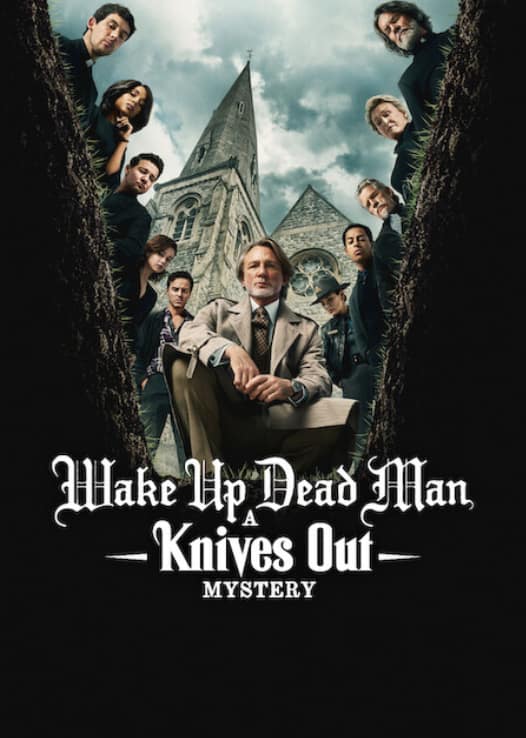
The latest installment of the megahit Knives Out film series is here. But does the new one match up? Wake Up Dead Man, the third installment of the series, was released in select theaters in November before hitting Netflix in December. The mystery follows Benoit Blanc’s (Daniel Craig) investigation of the seemingly impossible death of a small-town reverend, Monsignor Jefferson Wicks (Josh Brolin), while simultaneously exploring social commentary on religion as Blanc interacts with an idealistic preacher (Josh O’Connor) and several of the dead reverend’s cultlike followers.
(SOME SPOILERS AHEAD)
Best Actor: Josh O’Connor (as Jud Duplenticy)
In a film with a surprisingly large focus away from murder, O’Connor sells the emotional depth of the story. His character Jud Duplenticy has an earnest belief in the Church and the good work that can be accomplished in the priesthood. This starkly contrasts with the manipulative and selfish behavior of Monsignor Wicks, which sets up the moral conflict of the film. O’Connor’s Duplenticy is kind and good-natured, but with a steely resolve to find the killer that befits a former boxer. Most importantly, though his life’s mission is to make the townspeople happy, O’Connor effectively conveys heartache as he grapples with the entire town’s accusations of murder against him.
Best Minor Character/Suspect: Simone Vivane (portrayed by Cailee Spaeny)
Wicks’ cadre of followers are all relatively one-dimensional, but that doesn’t necessarily diminish their roles. In terms of the film’s social commentary regarding the goods and ills of religion, Vivane’s character is particularly compelling. A disabled cellist failed by medical solutions, Vivane pours her heart—and money—into Wicks and the Church. But all the while, she struggles to truly buy into Church doctrine—to believe. Duplenticy and Blanc occupy clean ends of the religious spectrum, while Vivane illustrates the middle ground. She perfectly represents the type of person who could be persuaded to any side. Duplenticy wishes to teach her love, Wicks wishes to manipulate her for his own gain (and profit), and Blanc wishes to push her away from religion altogether. Not only is it realistic to have such a middle ground, but she shows what the stakes really are: control of the Church’s message, and by proxy, morality itself.
Funniest Character: Lee Ross (portrayed by Andrew Scott)
Ross is a beautifully executed caricature of a washed-up celebrity who started posting conspiracy theories on social media. He’s rarely involved in the story, but that’s better since the joke never really gets old. The meta joke about the murder mystery ending up on Netflix got a laugh out of me, as well as the excellent callback at the movie’s end when all of the customers at Ross’ book signing are dressed like John Goodman from The Big Lebowski (Ross lampooned earlier that all his Substack readers looked like this).
Best Scene: The Resurrection of Wicks
The moment when a man resembling the dead Wicks bursts out of the sealed crypt, you know that something fishy is going on, yet you have no idea what. That’s what makes this such a great scene. In a movie about an impossible crime, this is when it feels the most impossible: you have truly no idea what’s going on, and neither does Benoit Blanc. This scene also has a doubly large effect on the religious focus of the movie, another “do I believe?” question for characters like Vivane, Duplenticy, and Blanc to wrestle with.
Best New Element: Religious Commentary
The film simultaneously tackles the good and bad of religion. It juxtaposes Duplenticy and Wicks as two sides of the same coin. They each prioritize the community aspect of religion, but use it in different ways. Duplenticy uses it as a tool to spread light and love; Wicks uses it as a tool to tighten his grip on the town and profit in the process. Through this lens, Blanc is written effectively to investigate both the murder and the contrasts in how the two men view Church work.
Biggest Flaw: Humor Takes a Backseat
The only true downside of this film was the relative absence of jokes. Comedy had a large presence in the first two renditions of Knives Out, but it fades away here in favor of a deeper emotional storyline. While I don’t dislike what we ended up getting (the religion subplot), I did miss some of the witticisms that felt like the soul of the first two films.
All in all, Wake Up Dead Man breaks new ground for the Knives Out series, exploring nuanced social themes in a way the other films avoided. It does this while remaining true to the core of the franchise, with excellent writing and acting performances that keep you on the edge of your seat. The fourth film can’t come soon enough!