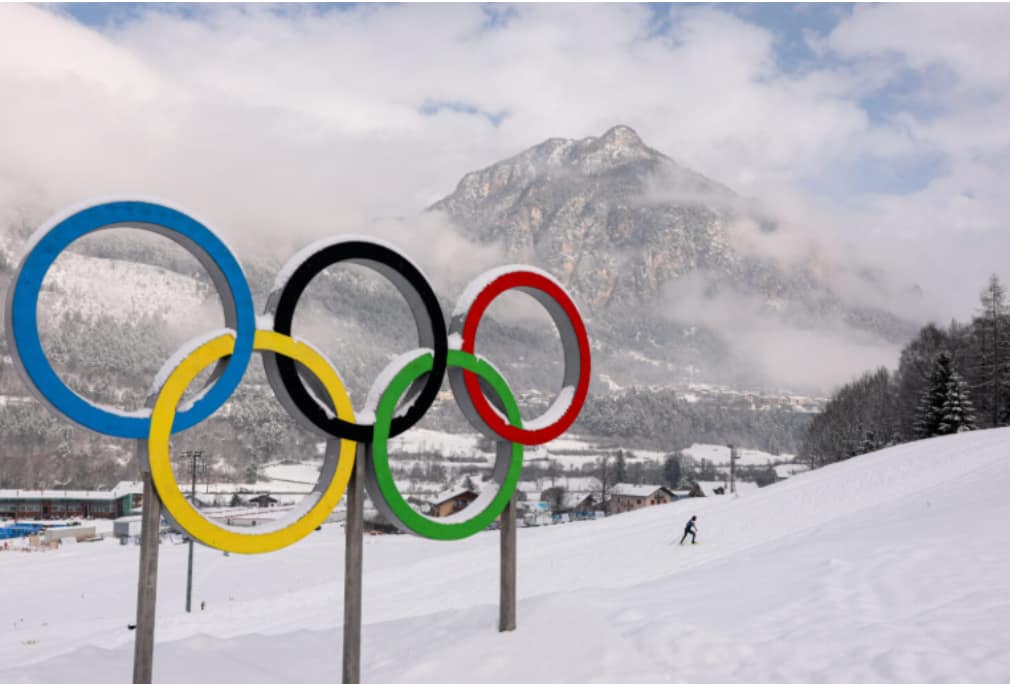
Snow and ice shifted under the skies as the Winter Olympics got underway in Milan-Cortina 2026. Athletes adjusted their helmets and goggles, while officials checked the slopes. Moments later, it was announced that the freeski halfpipe would be postponed due to heavy snowfall.
What seemed like a simple snowstorm was part of a pattern that scientists, on the winter olympics committee, say is becoming increasingly common: unpredictable winter weather where the conditions Olympic athletes depend on are no longer guaranteed. Slushy slopes and rapidly changing conditions made training difficult, forcing athletes to adapt. American cross-country skier Gues Schumacher described the courses as “super icy one day and pretty slushy the next.” Even when the competitions continued, the slushy and uneven snow presented unique challenges. Freestyle skiers and snowboarders adjusted their landings, while alpine and cross-country skiers risked slower times by competing on courses with softened ice or ice patches. “We’re rolling the dice,” claimed Canadian aerial skier Marion Thénault, who spread awareness about the climate in winter sports. Competition and training sessions were even cancelled in some venues when the snow melted too quickly or became unsafe.
Organizers have relied on snow machines to replace the natural snowfall that once shaped the Winter Games. Snow machines have been a tool for competitive events, but their use at the Olympics has grown dramatically. The Beijing 2022 Winter Olympics relied on almost 100% artificial snow, generating millions of tons of man-made snow at venues because the region simply didn’t receive reliable snowfall. Milan-Cortina also leaned heavily on artificial snow, and preserved snow under layers of sawdust. These measures have helped ensure that the competition met international standards. However, it made athletes navigate surfaces that are less consistent than natural snow, making their performance and safety incredibly difficult.
The reliance on artificial snow presents a large problem. Climate change is making winter sports less predictable and is threatening traditional Winter Olympic venues. According to a 2024 study made by the International Olympic Committee, only 56% of potential Winter Olympic host sites would be unreliable due to their climate by the 2050s, and 71% would be unsuitable by the 2080s. Cortina itself has warned of 6.4°F since it last hosted the games in 1956, and sees 41 fewer freezing days annually.
This problem isn’t just limited to Milan and Croatia. Nearly every other city that has hosted the Winter Olympics since 1950 have warmed as well, threatening reliability, safety of competitors, and the actual fairness of the outdoor winter sports. The future of the Winter Olympics is skating on thin ice. Without action, the games risk becoming about who performs better under difficult weather conditions rather than showcasing true athletic ability.