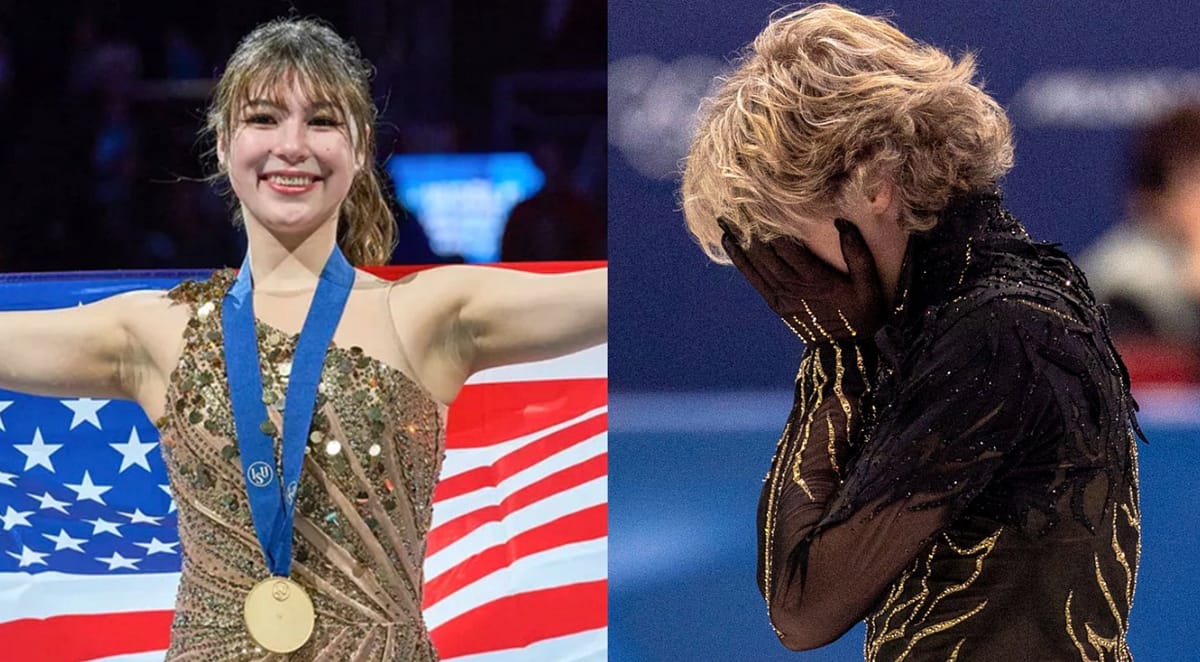
Among the athletes that went viral after the 25th Winter Olympics held in Milano Cortina, Alysa Liu, the 19-year-old figure skater who won two golds, is definitely one of them. But the aspect that made her stand out among the winners was how she won. Placing sixth in the Beijing Olympics four years ago, she took a break from skating before coming back in 2025. After the break, she expressed that she found that what mattered more than the medals was the joy skating brought her. And as an athlete in a sport known for the high pressure, her cheerful skating ignited the crowd, and her relaxed mindset assisted her in performing cleanly under the Olympic pressure.
However, some social media comments had emerged that involved comparing other athletes to Alysa and shaming them for being nervous, raising the worry of the athletes acquiring the new pressure of, quite ironically, “not carrying pressure”. While praising Alysa’s healthy mindset, we must acknowledge the different contexts athletes faced. For example, Amber Glenn, Alysa’s teammate was one of those who was accused of “being too nervous”, causing her to disappoint in the short program. These kinds of comments neglected the fact that Amber was 25 years old—an age that is considered quite old for the sport—competing in her first Olympics, and was also combating ADHD. Rather than criticizing athletes themselves for “not being relaxed enough”, the discussions should be driven towards encouraging coaches and committees to put less pressure on their skaters.
Apart from Amber, another of Alysa’s teammates faced a similar accusation. Perhaps the biggest disappointment in the entire figure skating event, Ilia Malinin, the absolute favorite for gold, failed to deliver the free skate he had hoped for after taking the lead in the short program, eventually placing 8th. After all, he was the “Quad God”, not losing a single competition for almost two years, breaking the world record multiple times and being the only person in the world to land a quadruple axel, the hardest technical element a human being had ever landed. How did the competition he was almost certain to win turn out in this way? What happened?
The answer may be in the question itself: the media left no room for him to fail, almost mythifying him. In the commentary from Peacock, the name “Ilia Malinin” was mentioned after almost every skater, with numerous scenes of him arriving, warming up, and interviewing. The press reported him almost as if he had already won the gold and raised the expectations for his success. The pressure to not only win, but to win with a quadruple axel and a world record, caused his eventual breakdown.
Ironically, after the disappointing results, he was faced with a media backlash. “‘Quad God’ Falls”, reports The New York Times, with an illustration of him falling on the ice, “Skating’s ‘Quad God’ Is Mortal, After All: ‘I Blew It’” echoed The Wall Street Journal. However, they forgot the fact that it was exactly they who called Ilia a “God” and placed huge expectations on him.
The mainstream media participates in a cycle of myth making: elevating athletes to high expectations before amplifying their failures when they fail to live up to it. The media gets clicks and views, leaving the athlete vulnerable to the pressure and scrutiny. This tragic story yet once again exposes the consequences of irresponsible journalism, and calls for the importance of approaching journalism in a more humanistic and responsible way.